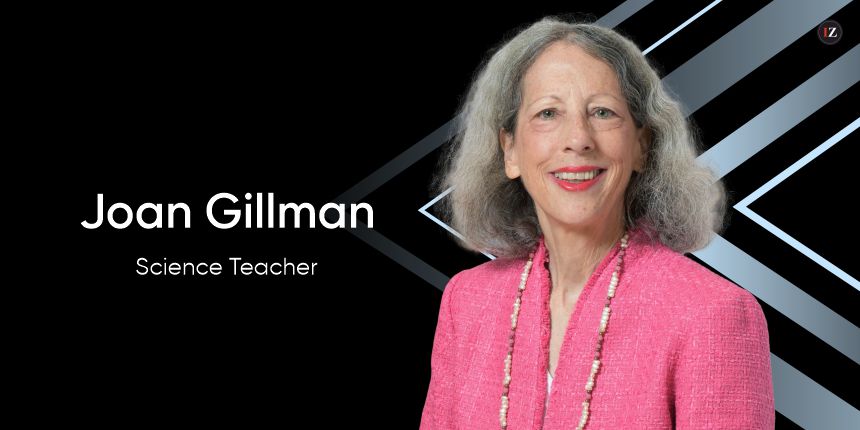
In a world that increasingly values speed over depth, the most enduring influence often comes from those who commit themselves to shaping minds with patience, purpose, and clarity. The educators who stand out are not simply conveyors of knowledge, but architects of curiosity and resilience. Among them is Joan Gillman, whose lifelong dedication to science education reflects a philosophy grounded in inclusiveness, discipline, and a belief in the transformative power of learning.
A Childhood of Curiosity That Shaped a Lifelong Calling
Joan’s interest in science and engineering began in childhood, when she experimented with powders and liquids at home, convinced she might invent something new. The compassionate educator was equally fascinated by weather, carefully measuring snowfall, tracking temperature and barometric pressure, and documenting storms with a camera while appreciating their beauty.
Much of her early creativity was shaped alongside her older brother. Together, they built shoebox robots, designed model cities using Kenner sets and Lincoln Logs, naming one Kinderkamack Village, and constructed snow tunnels with practical features like escape windows. These playful projects quietly developed the problem-solving and collaborative skills she would later use as an educator.
Her interest in teaching emerged in high school through a community service program. Joan volunteered with younger students, teaching recorder, tutoring math, and organizing inclusive playground games, earning recognition for ensuring all children felt involved. She also taught swimming at the local JCC, including children with special needs, and worked as a substitute ballet instructor. These experiences shaped her belief in inclusivity and her commitment to giving every child the opportunity to grow and succeed.
Hands-On Learning as a Foundation for Leadership
While completing a Master’s Degree in Education, Joan worked as a student teacher at P.S. 47 Junior High School for the Deaf. There, the empathetic teacher taught profoundly deaf science students in grades 7 through 9 under the guidance of a mentor who emphasized hands-on learning. Students applied scientific principles by building a mini amusement park with working rides. This experience solidified her commitment to experiential learning as a core teaching method.
A Mission Rooted in Empathy
When asked to distill her mission into a single sentence, Joan turns to poetry. She references Mary T. Lathrap’s “Judge Softly,” and its famous line: “Never judge someone until you have walked a mile in their moccasins.” The compassionate educator believes that too often people rush to judge others without understanding what they have been through, and that this reminder keeps her rooted in empathy as both an educator and a human being.
Nurturing Curiosity and Purpose in Education
As an educator, Joan hopes her students will make a positive impact on the world. She prioritizes maintaining the natural curiosity children have and encourages them to see science not as intimidating, but empowering. The empathetic teacher believes students can use their knowledge to make meaningful contributions.
Her work is guided by four core values emphasized in her school: dignity, curiosity, purpose, and honesty. She fosters a classroom environment where students support one another, recognizing that each individual brings unique strengths to collaborative work.
Reaching Fellow Educators
Joan’s leadership extends far beyond her own school’s walls. She has authored articles for the STANYS Bulletin and Science and Children, contributed to the 2016 book “Bringing STEM to the Elementary Classroom,” and most recently, provided materials for Corwin’s “What Teachers Want to Know About Teaching Climate Change.” She has delivered workshops at NSTA (National Science Teaching Association), NSTA STEM, STANYS (Science Teachers Association of New York State), SCONYC (Science Council of New York City), STEMTeachersNYS, and NYSAIS (New York State Association of Independent Schools) Diversity Symposium conferences, and in 2024, the compassionate educator helped plan the SCONYC conference itself. Every insight gathered at these gatherings, she brings back to share with colleagues at The Browning School.
Recognition and the True Measure of Impact
Joan has received numerous accolades:
- Joan was named “Top Educator of the Year 2025” by the International Association of Top Professionals, an international honor she views as both humbling and an opportunity to inspire educators globally.
- She was also recognized by IAOTP as one of the “Top 25 Global Impact Leaders,”and is set to receive the “Lifetime Achievement Award” (2026), “Top Educator of the Decade,”and “Woman of the Year 2026.”
- She recently joined the Forttuna Education Council, where she aims to collaborate with global leaders to advance education.
- A defining career moment came in 2017 when Joan received the Urhy Teacher of the Year Award at the Calhoun School, recognizing her dedication to students.
- She has earned multiple distinctions from Marquis Who’s Who, including Top Educator, Who’s Who of Professional Women, Lifetime Achievement Award, and Who’s Who of Humanitarians and Philanthropists, along with features in Forbes and Insight Magazine.
- Additional recognition includes features in National Digest Magazine and World’s Leaders Magazine, and designation as a Legacy Member by Kappa Delta Pi.
- Her recent honors include Most Inspiring Educator in Science Education 2024 (CXO Time), Top 10 Leaders Shaping the Future 2024, Top 10 Empowering Women Leaders 2024 (CIO Views), and Top 5 Women to Know 2025 (The Executive Lens), along with recognition on MSN News.
Despite extensive accolades, the empathetic teacher considers her greatest achievement to be helping students become confident, lifelong learners and achieve their goals.
Standing Out From The Crowd
Joan is distinguished by her relentless work ethic and commitment to continuous growth. She actively pursues professional development through workshops to refine her methods and better engage her students, refusing to remain stagnant despite decades in education. Over her 44-year career, the compassionate educator has adapted to evolving practices while also contributing to the field: leading workshops at professional conferences, publishing articles, and having her work featured in books, all aimed at inspiring fellow educators and strengthening their passion for teaching.
Adapting to Challenges in a Changing Landscape
One of Joan’s greatest challenges as an educator has been adapting to rapidly evolving technology. When the empathetic teacher began teaching in 1982, her classroom relied solely on a blackboard and chalk, and her first encounter with a computer left her unsure even how to turn it on. Today, technology is central to her teaching. At The Browning School, she makes extensive use of SmartBoards and Chromebooks, along with platforms such as Seesaw, Google Classroom, and Canvas, tailoring each to different age groups. While Joan values these tools for enhancing engagement and accessibility, she approaches emerging technologies like AI with caution, emphasizing that they should support, not replace, students’ own skill development.
She also sees climate education as a critical challenge, requiring a balance between awareness and reassurance. As leader of the Green Team, Joan encourages practical, student-led initiatives, such as weekly “Green Actions”, to promote small but meaningful environmental changes within the school community.
In addition, Joan works to ensure that students receive a well-rounded science education. Following the school’s adoption of the Next Generation Science Standards, she has collaborated with colleagues to revise and strengthen the curriculum, aligning it with a broader and more integrated approach to science learning.
Resilience Through Commitment and Adaptability
From teaching in the South Bronx with diverse learning levels to adapting during the pandemic with interactive virtual labs, Joan has consistently met challenges with determination. She recalls difficult moments, such as explaining the Challenger disaster to students, as defining experiences that underscored the importance of her role.
The Future of Education and Innovation
Joan believes the future of education as increasingly interdisciplinary, integrating subjects to reflect real-world connections. The compassionate educator continues to align curricula with modern standards and emphasizes environmental stewardship through student-led initiatives.
She believes science helps students become keen observers and systematic thinkers, skills that apply across any career. By learning to test hypotheses through the scientific method, students gain practical tools for solving real-world problems.
As a leader of the Green Team, the empathetic teacher works to instill environmental responsibility, encouraging students to become thoughtful stewards of the planet. She nurtures leadership by fostering compassion and a desire to create positive change, guiding students to take meaningful, small-scale actions within their community. These include weekly “Green Action” initiatives, park cleanups in Central Park, Biodiversity Week challenges, guest speaker sessions, and fundraisers supporting environmental and disaster relief efforts.
In addition to teaching science, she serves as a 7th grade advisor, supporting students through their transition by acting as a mentor and problem-solver, helping them navigate challenges and find effective solutions.
Discipline, Balance, and Personal Growth
Her success is rooted in discipline, structured routines, and self-care. Outside the classroom, Joan finds balance through music, playing violin and piano, which deepens her empathy for students facing learning challenges. She attributes her effectiveness to dedication, organization, and creativity, supported by continuous professional development.
Guidance for Future Leaders
She emphasizes the importance of lifelong learning, maintaining humor, and seeking support from peers. She acknowledges the challenges of teaching but highlights its profound rewards.
Looking Ahead
Joan plans to focus on lower school science education while continuing her leadership roles and professional contributions. She remains active in advisory and educational organizations.